Chemical Spill A Predictable Water Crisis – WVRivers

Chemical Spill A Predictable Water Crisis – WVRivers.


By Angie Rosser, WVRC Executive Director

I was one of 300,000 West Virginians who learned their water had been contaminated by a chemical leak two miles upstream from the state’s largest drinking-water intake. Predictably, politicians and the public are clamoring for heads to roll—most notably those of managers at the Freedom Industries plant responsible for the leak.

Freedom Industries should be held accountable, but that won’t fix the problem. That’s because the Elk River spill wasn’t an isolated accident. It was the inevitable consequence of weak regulatory enforcement over many years, made possible by our collective failure to uphold the values we profess.

We all say we value clean water, so why do we accept pollution as the status quo, as a byproduct of everyday life? In public opinion polls, Americans routinely and overwhelmingly say that it’s the job of government to ensure clean water. And yet we continue to let elected officials off the hook when it comes to clean water laws.

In this light, the Elk River spill could be the future of many American cities. It’s one in which systems failures cause local catastrophic events—leaving taxpayers to foot the bill to clean up after polluters.

Since the earliest days of the chemical industry, it has been a major part of West Virginia’s economy. We live every day with the potential for toxic leaks into our waterways, knowing the consequences can be devastating. We shouldn’t have to live this way.

Since the passage of the Clean Water Act in 1972, industry has worked diligently to weaken the law’s enforcement and oversight.

As the director of an organization that advocates for clean water, I regularly witness the audacious influence of industry as it cajoles lawmakers and regulators to lower production costs by lowering the bar on public health. I review the same data as the politicians do on the risks to public health posed by weakening clean-water standards. But when it comes to environmental stewardship, data and facts are no match for industry’s sway over government.

And at times like these, I see the irony of politicians scapegoating a company whose pollution is enabled by government’s failure to adequately regulate. We’ve allowed them to foster a culture of neglect instead of one of oversight and accountability.

The Mountain State enjoys an abundance of water, but year after year we have seen access to clean water diminish. Our water has paid the price for our legacy of mining, gas drilling, coal-burning power plants, and chemical production. We have seen the steady chipping away of our water quality standards to help reduce costs to big coal. We have seen the injustices of people’s right to clean water usurped by industries. Indeed, there are parts of West Virginia that will never have access to clean water, where industrial pollution has caused irreparable harm to water supplies.

I hope the West Virginia water crisis reminds us about how dependent we are on clean rivers for our health and security. Now is the time to take a critical look at how to better protect our water sources. We can do this only by acknowledging that the Elk River spill is not a story about an isolated leak. This is about the need for systemic changes in industrial practices and our national responsibility to establish and enforce adequate protections.

We need to look at ourselves and remember our values. We need to be true to our relationship with water by expanding our expectations of elected leaders. And industries and consumers need to accept the costs of safer, more environmentally-sound production of certain goods and services. That’s the price of clean water.

Clean water is essential for life. It is also essential for our national and global security. I hope that once the immediate crisis is over, serious thought will go into meaningful reforms and investment in protecting our rivers and streams that are our lifeline.

CHESAPEAKE APPALACHIA LLC TO PAY $3.2 MILLION PENALTY TO RESOLVE CLEAN WATER VIOLATIONS IN WEST VIRGINIA

Picture 32
from http://ecowatch.com/wp-content/uploads/2012/10/wetzel.jpg


Contact: DOJ (202) 514-2007 / EPA (215) 814-5113 / heron.donna@epa.gov
ENERGY COMPANY TO PAY $3.2 MILLION PENALTY TO RESOLVE CLEAN WATER VIOLATIONS IN WEST VIRGINIA

Chesapeake Appalachia LLC to Spend Estimated $6.5 million to Restore Areas Damaged by Natural Gas Extraction Activities

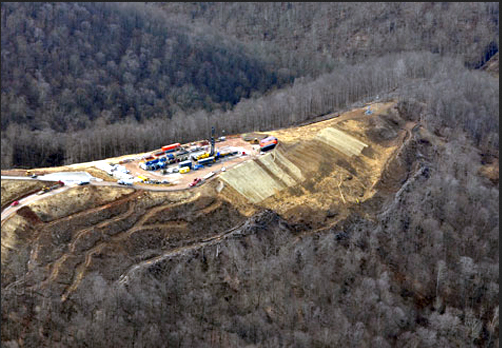
WASHINGTON – The Department of Justice and the U.S. Environmental Protection Agency announced today that Chesapeake Appalachia LLC, a subsidiary of Chesapeake Energy, the nation’s second largest natural gas producer, will spend an EPA-estimated $6.5 million to restore 27 sites damaged by unauthorized discharges of fill material into streams and wetlands and to implement a comprehensive plan to comply with federal and state water protection laws at the company’s natural gas extraction sites in West Virginia, many of which involve hydraulic fracturing operations.
The company will also pay a civil penalty of $3.2 million, one of the largest ever levied by the federal government for violations of Section 404 of the Clean Water Act (CWA), which prohibits the filling or damming of wetlands, rivers, streams, and other waters of the United States without a federal permit.
“With this agreement, Chesapeake is taking important steps to comply with state and federal laws that are essential to protecting the integrity of the nation’s waters, wetlands and streams,” said Robert G. Dreher, Acting Assistant Attorney General of the Justice Department’s Environment and Natural Resources Division.  “We will continue to ensure that oil and gas development, including development through the use of hydraulic-fracturing techniques, complies with the Clean Water Act and other applicable federal laws.”
“Wetlands and streams serve important roles in the aquatic ecosystem by supporting aquatic life and wildlife. Wetlands also play a valuable role in recharging our groundwater and drinking supplies, and reducing flood risks,” said EPA Regional Administrator Shawn M. Garvin. “This case sends a clear message that EPA and other federal and state regulatory agencies will do what is necessary to ensure compliance with the Clean Water Act and to protect these valuable resources and the health of our communities.”
The federal government and the West Virginia Department of Environmental Protection (WVDEP) allege that the company impounded streams and discharged sand, dirt, rocks and other fill material into streams and wetlands without a federal permit in order to construct well pads, impoundments, road crossings and other facilities related to natural gas extraction. The alleged violations being resolved by today’s settlement occurred at 27 sites located in the West Virginia Counties of Boone, Kanawha, Lewis, Marshall, Mingo, Preston, Upshur and Wetzel, including 16 sites involving hydraulic fracturing operations. The government alleges that the violations impacted approximately 12,000 linear feet of stream, or approximately 2.2 miles, and more than three acres of wetlands.
The settlement requires that the company fully restore the wetlands and streams wherever feasible, monitor the restored sites for up to 10 years to assure the success of the restoration, and implement a comprehensive compliance program to ensure future compliance with the CWA and applicable state law. To offset the impacts to sites that cannot be restored, the company will perform compensatory mitigation, which will likely involve purchasing credits from a wetland mitigation bank located in a local watershed.

The alleged violations being resolved by today’s settlement occurred at 27 sites located in the West Virginia Counties of Boone, Kanawha, Lewis, Marshall, Mingo, Preston, Upshur and Wetzel. EPA discovered some of the violations through information provided by the public and routine inspections. In addition, the company voluntarily disclosed potential violations at 19 of the sites following an internal audit. In 2010 and 2011, EPA issued administrative compliance orders for violations at 11 sites. Since that time, the company has been correcting the violations and restoring those sites in full compliance with EPA’s orders.
The settlement also resolves alleged violations of state law brought by WVDEP. The state of West Virginia is a co-plaintiff in the settlement and will receive half of the civil penalty.
In a related case, in December 2012, the company pleaded guilty to three violations of the CWA related to natural gas extraction activity in Wetzel County, at one of the sites subject to today’s settlement. The company was sentenced to pay a $600,000 penalty to the federal government for discharging crushed stone and gravel into Blake Fork, a local stream, to create a roadway to improve access to a drilling site. The company has already fully restored the damage done to the site.
Filling wetlands illegally and damming streams can result in serious environmental consequences. Streams, rivers, and wetlands benefit the environment by reducing flood risks, filtering pollutants, recharging groundwater and drinking water supplies, and providing food and habitat for aquatic species.
Chesapeake Appalachia engages in the exploration and production of natural gas in the Appalachian Basin. The company has oil and natural gas properties in West Virginia, Pennsylvania, and Ohio.
The consent decree, lodged today in the Northern District of West Virginia, is subject to a 30-day public comment period and court approval. The consent decree is available for review at http://www.justice.gov/enrd/Consent_Decrees.html
More information about the settlement: www2.epa.gov/enforcement/chesapeake-appalachia-llc-clean-water-settlement


Join WVRC at the Wild & Scenic Film Fest for a Sneak Peak of This American Land


Join WVRC at the Wild & Scenic Film Fest for a Sneak Peak of This American Land

WVRC Executive Director Angie Rosser and the This American Land crew on along the Williams River within the proposed Birthplace of Rivers National Monument

(to read more click below!!)

Join WVRC at the Wild & Scenic Film Fest for a Sneak Peak of This American Land.

Libertarian pushes himself as alternative in nasty Virginia governor’s race | The Daily Caller

Libertarian pushes himself as alternative in nasty Virginia governor’s race

via Libertarian pushes himself as alternative in nasty Virginia governor’s race | The Daily Caller.


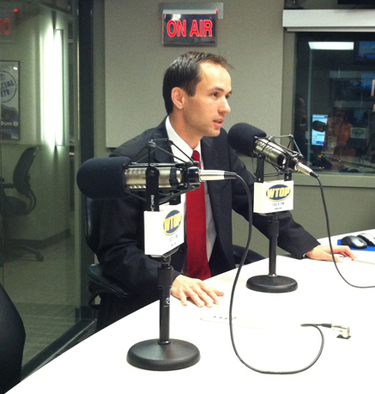
“The main reason I ran was that I saw that the Republican and Democrat were both very bad for Virginia,” Sarvis told The Daily Caller. “And I wanted there to be an option that the people can vote for that’s both focusing on economic freedom, good economic policy and also personal freedom.”